Parallels 16 extremely slow on MBP

PatrickP9

Bit poster
Hi all,
I have a MBP16, 8 core i9, 64gb memory, 8gb AMD Radeon and for some reason Parallels is unbearably slow.
Parallels is configured on "Games only" mode with 4 processors and 8gb of memory, running on Windows 10.

I can barely move the mouse across across the screen when on Parallels as there is a 15 sec response lag.

Any ideas why this could be the case?

ps: Bootcamp is running very smoothly and without any problems.

Thanks

 
Now, if I could ONLY remove the annoying 'upgrade to 16' message from Parallels (they don't have a solution for that either).
 

Attachments

  • annoying_parallels_upgrade_message.png
    annoying_parallels_upgrade_message.png
    276.9 KB · Views: 13
I'm running Big Sur (11.1) and Parallels 16.1.2 (49151) Pro Edition and Windows 10 is also basically unusable for me now. Clicking almost anything (like just opening the start menu) takes 10-15 seconds. Are there any workarounds or suggestions?
 
Mine is same case. I find it almost impossible to use my computer once I start windows10 in MACOS Big Sur 11.1. I have performed all recommendations shared by Parallel Desktop but all useless till now. Is there any other VM which can import snapshot of parallel desktop and I can use it as it is. Parallel desktop is really frustrating and I need to switch to other VM to resume my work.
 
Mine is same case. I find it almost impossible to use my computer once I start windows10 in MACOS Big Sur 11.1. I have performed all recommendations shared by Parallel Desktop but all useless till now. Is there any other VM which can import snapshot of parallel desktop and I can use it as it is. Parallel desktop is really frustrating and I need to switch to other VM to resume my work.

Someone recently told me that Big Sur is a resource hog. I wonder if that is part of the problem. I'm still using Mojave (no plans on upgrading).
 
Running current versions of Parallels, VMWare Fusion and Big Sur, i9 Macbook Pro, 4 cores and 8GB memory for both VMs, same Excel sheet. Approx. 10s compute time for Fusion, very smooth, 60s for Parallels, very stuttery. Have converted VMs both ways from Fusion to Parallels and Parallels to Fusion, makes no difference to the timings, definitely appears to be Parallels, or a Parallels configuration issue. Will check back occasionally for any further developments/advice.
 
Running current versions of Parallels, VMWare Fusion and Big Sur, i9 Macbook Pro, 4 cores and 8GB memory for both VMs, same Excel sheet. Approx. 10s compute time for Fusion, very smooth, 60s for Parallels, very stuttery. Have converted VMs both ways from Fusion to Parallels and Parallels to Fusion, makes no difference to the timings, definitely appears to be Parallels, or a Parallels configuration issue. Will check back occasionally for any further developments/advice.
Hi, did you check the same issue with the latest Parallels Desktop update?
If the issue still persists could you collect the tech report and post the report's ID here please?
 
Looks like Parallels just released an update today, 16.1.3 (49160). I upgraded to it and so far it seems to have resolved my performance issues.
It seemed like performance improved for a little while, but after a day or two it is still bad even with the latest 16.1.3 update. I'm running Big Sur 11.2
 
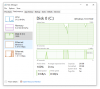
I noticed today that whenever Windows slows down that the disk IO goes to 100%. I can do a simple save on a file and it will go to 100% for 15-20 seconds and Windows locks up during that time.
 

Attachments

  • Screen Shot 2021-02-05 at 3.28.23 PM.png
    Screen Shot 2021-02-05 at 3.28.23 PM.png
    88 KB · Views: 7
I have experienced that performance was good for a few days, and then regressed. I'm also seeing host CPU at 100% for Parallels when the VM is doing nothing which causes the host fans to spin up unnecessarily.
 
Another finding: limiting the amount of graphics memory to a set value (512MB for example) fixes the problem so far: https://kb.parallels.com/en/124575
What I notice is that with this value set, I don't see my host memory pressure get to the red state. When it would go red, I would experience the disk thrashing like AustinG2 with the disk in the Windows guest pegging at 100% and locking up the host. My guess is something is awry with the Auto setting, causing the host RAM to fill up and then need to swap. Just guessing though. At least my host isn't completely crashing now!
 
I have experienced that performance was good for a few days, and then regressed. I'm also seeing host CPU at 100% for Parallels when the VM is doing nothing which causes the host fans to spin up unnecessarily.
My issue is to do with Excel macros involving complex computation and cell manipulation. 5-6 times slower than when using the same VM running under VMWare Fusion (imported directly). During the calculations Parallels never uses more than 30% of the CPU but the CPU stutters badly. Using Fusion the mouse hourglass spins without interruption but not so with Parallels where it is stop/start for the duration. This has happened only recently, say within the last month or two, at some stage following the Big Sur update. I am using the latest versions of Big Sur, Windows, Office 365 and Parallels on an i9 Macbook Pro.
 
Another finding: limiting the amount of graphics memory to a set value (512MB for example) fixes the problem so far: https://kb.parallels.com/en/124575
What I notice is that with this value set, I don't see my host memory pressure get to the red state. When it would go red, I would experience the disk thrashing like AustinG2 with the disk in the Windows guest pegging at 100% and locking up the host. My guess is something is awry with the Auto setting, causing the host RAM to fill up and then need to swap. Just guessing though. At least my host isn't completely crashing now!
Thank you for pointing out display memory as the (likely) culprit!
So I went to Settings "Display" and set Shared Graphics Memory to the "recommended" value in the drop box, in my case 8192mb (being all memory allocated to the VM). Previously I had a lower value assigned. It appears that Parallels carves up total memory and allocates display memory from that.
Anyway, the problem is now fixed for me at least. Thanks again.
 
Back
Top