I recently figured out how to install Parrot OS Security Edition in a Parallels VM on Apple Silicon. It's something I've been tinkering with for a while, and I thought I'd share how I did it since I've seen some posts by people looking for help with it.
The process below may look like a lot of steps, but if you are comfortable using the command line it only takes a few minutes. It will probably save you time compared to installing the Architect Edition and then trying to configure it like the Security Edition.
Credit goes to user Doug_Joseph, who's shared that a UTM vm can be converted to a Parallels VM in this thread: https://forum.parallels.com/threads/possible-to-convert-utm-vm-to-parallels-vm.360367/#post-921353
Credit also goes to this poster who shared the correct method to convert a vdi to a Parallels hdd when there is no OS detected: https://forum.parallels.com/threads/prl_convert-allow-no-os.359613/#post-912853. This was tricky as the command was failing for me without the --stand-alone-disk option, but unfortunately, that option isn't documented.
Enjoy.
The process below may look like a lot of steps, but if you are comfortable using the command line it only takes a few minutes. It will probably save you time compared to installing the Architect Edition and then trying to configure it like the Security Edition.
- Install Homebrew if you don't already have it. https://brew.sh/
- Use Homebrew to install qemu by entering the following command in your Terminal: brew install qemu
- Download the utm file of the Parrot OS Security Edition from https://www.parrotsec.org/download/
- Unzip the downloaded file. This will produce a directory named for the downloaded Parrot OS version followed by ".utm". For example: Parrot-security-5.3_arm64.utm
- There will be a folder called Data inside the folder you just unzipped. It contains a .qcow2 file. Move it to your Parallels directory, /Users/YourName/Parallels, so you're not working in deeply nested folders.
- Use qemu to convert the qcow2 file to a VirtualBox virtual hdd. Open your terminal and enter cd ~/Parallels to go to your Parallels folder, where you just moved the qcow2 file. Run the following command: qemu-img convert -f qcow2 -O vdi LONGSERIESOFCHARACTERS.qcow2 ParrotOS.vdi. ParrotOS.vdi will be created in your Parallels folder. (Replace LONGSERIESOFCHARACTERS in the command with the actual name of the qcow2 file.)
- Open Parallels and make a new VM. Select "install from an image file", then select "Continue without a source", and click Continue.
- Choose either Debian GNU Linux or Other Linux as the Operating System. I chose Debian since Parrot is derived from Debian, but I suspect Other Linux will work just fine.
- Name it ParrotOS and select "Customize before installation". Click Continue. You should see ParrotOS.pvm appear in your Parallels folder.
- Back to the Terminal. Run the following command to convert the VirtualBox hdd to a Parallels HDD: prl_convert /Users/YourName/Parallels/ParrotOS.vdi --dst=/Users/YourName/Parallels/ParrotOS.pvm/ParrotOS.hdd --allow-no-os --stand-alone-disk. This will produce a file called ParrotOS.hdd in the VM you just created.
- Back to the VM configuration window. Go to Hardware > Hard Disk, and select the .hdd file you just created.
- Close the configuration window and click Continue. You will see a warning that says there is no OS on the virtual HDD. This is a lie. Click OK.
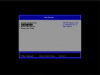
- On the BIOS screen in the VM, go to Boot Maintenance Manager > Boot Options > Add Boot Option > Long Volume UUID Name (The only option for me) > EFI > parrot > grubaa64.efi. Select it.
- Enter the description. I called it GRUB Bootloader. Select Commit Changes and Exit
- Go to Change Boot Order and move GRUB Bootloader to the top. Commit Changes and Exit.
- Go back to the main BIOS screen. Select Continue.
Credit goes to user Doug_Joseph, who's shared that a UTM vm can be converted to a Parallels VM in this thread: https://forum.parallels.com/threads/possible-to-convert-utm-vm-to-parallels-vm.360367/#post-921353
Credit also goes to this poster who shared the correct method to convert a vdi to a Parallels hdd when there is no OS detected: https://forum.parallels.com/threads/prl_convert-allow-no-os.359613/#post-912853. This was tricky as the command was failing for me without the --stand-alone-disk option, but unfortunately, that option isn't documented.
Enjoy.