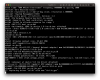
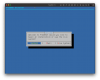
recently upgraded my instance of Parallels to version 26.2.0 (57363) and instantly regretted it. I have a FreeBSD 14.2 virtual machine configured as "Other" OS that started kernel panicking on every boot. The worst part is, I've heard that this is usually resolved by updating the operating system, but I can't even navigate the BIOS/UEFI screens because the virtual machine receives NO keyboard input no mater what I do. My Linux VM and Windows VM are unaffected.
I tried running the FreeBSD 15.0 netboot isntaller and that didn't make a difference. I tried removing as much hardware from the VM as I could, and no difference. Even just attaching a boot cd with no network devices and no printer sharing, I still can't get any input in the UEFI/BIOS screen.
When I recreated the VM and marked it as 'Other Linux", I get input in the BIOS/UEFI screen, but it can't initialize the graphics card.
I had to open a support ticket and the chat agent helped me downgrade to 26.1.2 (57293)
I tried running the FreeBSD 15.0 netboot isntaller and that didn't make a difference. I tried removing as much hardware from the VM as I could, and no difference. Even just attaching a boot cd with no network devices and no printer sharing, I still can't get any input in the UEFI/BIOS screen.
When I recreated the VM and marked it as 'Other Linux", I get input in the BIOS/UEFI screen, but it can't initialize the graphics card.
I had to open a support ticket and the chat agent helped me downgrade to 26.1.2 (57293)